Why Your Skin Changes in Autumn (And What Actually Helps)
As the air outside gets colder and drier, and the heating goes on indoors, the skin barrier is working harder than it was in July. Here's what's actually going on, and what to do about it.
What's Actually Happening
The core mechanism is trans-epidermal water loss (TEWL) — the natural, constant process of water evaporating out through the skin. It never stops, but its rate depends heavily on the environment. Lower humidity and colder air pull water out of the skin faster than the barrier can replace it, and central heating strips moisture from indoor air on top of that. Peer-reviewed research has found a strong correlation between temperature, humidity and rising TEWL, with the effect most pronounced during winter and the transition into it — which is exactly the autumn shift we're talking about.
The result: skin loses water faster than it can hold onto it, and the outer barrier (imagine bricks-and-mortar — skin cells as bricks, lipids like ceramides as the mortar holding them together) starts to show the strain.
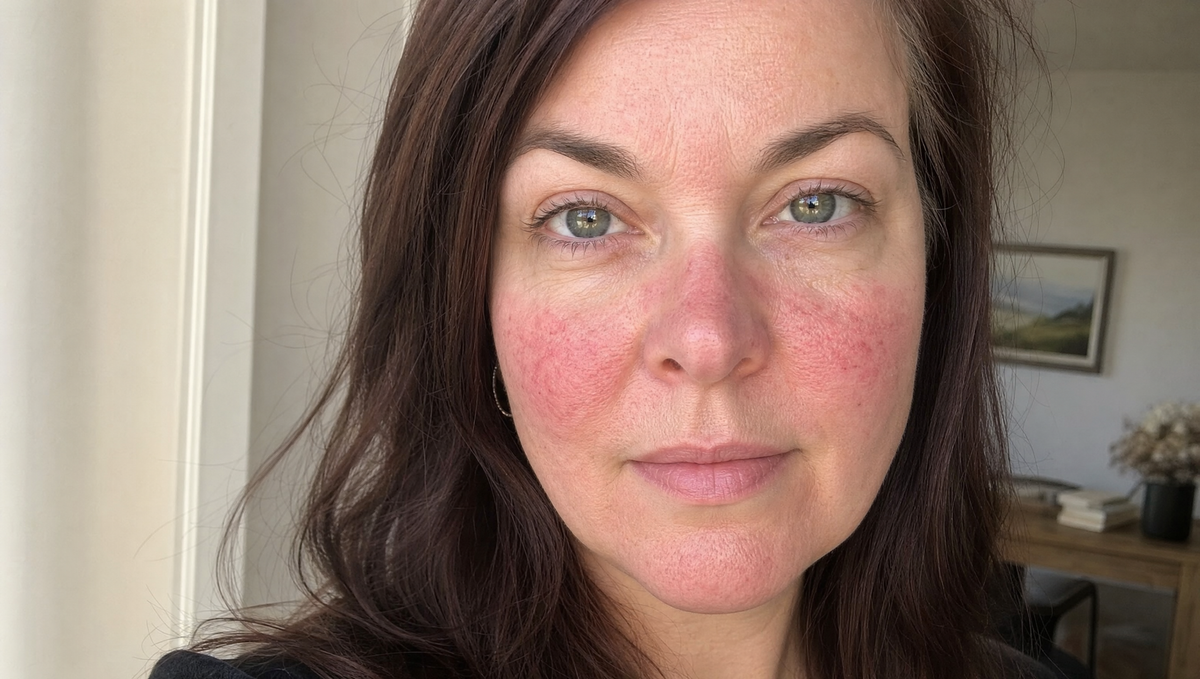
Signs Your Barrier Needs Support
- Tightness that shows up even right after moisturising
- Stinging or sensitivity to products that felt fine over summer
- Dullness that hydrating serums alone aren't fixing
- Flaking, especially around the nose and cheeks
- Breakouts in new spots — often the barrier overcompensating for dryness by producing more oil
The Autumn Routine Shift
This is less about adding more steps and more about swapping what's in the steps you already have.
Lean into barrier-supporting ingredients:
- Ceramides — rebuild the "mortar" that holds skin cells together
- Niacinamide — supports barrier function and may help reduce water loss
- Hyaluronic acid & glycerin — humectants that pull moisture in and hold it
- Squalane / plant oils — help seal that moisture in without clogging pores
Go richer, not just "more": a lightweight summer gel-moisturiser often isn't enough once heating kicks in. This is usually the point to move up to a cream or balm texture.
Autumn Is a Good Window to (Re)Start Actives
If you've been meaning to introduce a retinoid or an exfoliating acid, or you paused one over summer, autumn is genuinely a sensible time to do it. UV is lower than summer, so the sun-sensitivity that comes with these ingredients is easier to manage, and it gives skin time to build tolerance before winter dryness adds another layer of irritation risk. Going slowly (starting low strength, a couple of nights a week) matters more than the calendar date.
A Lighter SPF For Autumn
Autumn is a reasonable time to ease off the highest SPF factors — UV intensity is markedly lower than summer, so the burn and pigmentation risk that justifies an SPF50 in July isn't really there in October. A broad-spectrum SPF30 or SPF20 is enough for daily wear through the cooler months.
Quick Autumn Checklist
- Swap in a barrier-focused moisturiser (ceramides, niacinamide, HA)
- Move to a richer texture if your summer formula feels thin
- If introducing a retinoid/acid, start low and slow
- A broad-spectrum SPF30 is enough for daily autumn wear — no need for the summer-strength factor
- Watch for early signs of barrier stress rather than waiting for visible flaking
Not sure where your skin's actually at with the shift? [The free skin assessment] is the fastest way to get it looked at properly before you start swapping products.