

How to Choose the Right Vitamin A for Your Skin
If you've ever stood in front of a shelf full of serums — retinol, retinal, tretinoin, vitamin A — and had no idea which one was actually right for you, you're not alone. It's one of the most confusing corners of skincare, mostly because the marketing rarely explains the one thing that actually matters: they're not interchangeable, and starting with the wrong one is why so many people give up on vitamin A before it ever gets the chance to work.
Here's what you actually need to know to choose well.
Why vitamin A is worth the effort
Vitamin A works differently to almost anything else in skincare. Most active ingredients sit on the surface and do their job there, but Vitamin A goes further - it works by activating receptors inside skin cells that switch on the genes responsible for renewal. It's not coating your skin; it's instructing it to rebuild.
That's why it does so much at once:
- Speeds up cell turnover, helping skin shed old, dull cells faster — leaving skin looking fresher and more radiant
- Supports collagen production, and helps protect what you already have — supporting firmer, more resilient-looking skin over time
- Calms excess pigment production — supporting a more even, balanced tone and helping fade the look of dark spots
- Supports hyaluronic acid production in skin — helping it hold onto moisture for a plumper, more hydrated look
- The combined effect: smoother, more refined-looking texture
It's also worth knowing that your skin's own vitamin A naturally gets used up over time. Ageing plays a part, and so does everyday light exposure — not just intense sun, but the general light your skin is exposed to day to day. Topping it back up is a large part of why vitamin A is considered one of the few ingredients genuinely worth having in a routine, rather than just another trend.
Not all vitamin A is the same
This is the part that trips most people up. "Vitamin A" isn't one ingredient — it's a family, and every form sits at a different point on the same ladder:
Retinyl esters → Retinol → Retinaldehyde (retinal) → Retinoic acid (tretinoin)
Each arrow represents a conversion your skin has to make. Your skin can only directly use one form — retinoic acid — so everything else has to convert into it first, one step at a time:
- Retinyl esters (like retinyl palmitate, acetate or propionate) sit furthest from active, needing the most conversion steps. They're also your skin's own natural storage form of vitamin A — which means applying them works with how your skin already banks and releases its reserves, gradually building up levels over time rather than delivering the active form all at once.
- Retinol is the familiar middle ground — two conversion steps from active.
- Retinaldehyde (retinal) is one step from active, so it tends to work faster.
- Retinoic acid (tretinoin) is the active form itself, needing no conversion at all — which is why it's the strongest, and prescription-only.
The trade-off nobody mentions
Stronger isn't automatically better.
The closer a form sits to active, the faster it tends to work — but the more likely it is to cause irritation. The gentler forms take longer to show results, but almost anyone can tolerate them. Potency and comfort sit at opposite ends of the same spectrum, and neither end is "correct" — it depends entirely on your skin.
This is why the best form of vitamin A isn't the strongest one on the shelf. It's the one you'll actually keep using. A gentle form applied consistently for months will always outperform a strong one you abandon after a week of irritation.
So, which one should you start with?
A few honest questions to ask yourself:
- Have you used vitamin A before, or is this your first time? First-timers do best starting at the gentle end of the ladder.
- Is your skin generally sensitive, reactive, or prone to redness? If so, start gentle regardless of experience (Environ AVST Gel is going to be your best option)
- Are you currently using other actives (exfoliating acids, other retinoids)? Layering actives too quickly is one of the most common causes of irritation and can often achieve the exact opposite of what you're trying to.
There's no universal "best" answer here — which is exactly why guessing tends to go wrong, and why we built our free skin assessment the way we did (more on that below).
The step-up philosophy
Because potency and tolerance are a trade-off, the smartest way to introduce vitamin A isn't to pick the strongest thing on the shelf — it's to start at a level your skin can handle, and build from there. This thinking goes back further than most of skincare: Environ pioneered this approach back in 1990, launching what's widely credited as the world's first vitamin A skincare system, built specifically around introducing vitamin A gradually rather than all at once.
That same principle now shows up across several ranges — but it's not always the same kind of gradual. Some systems build gentleness through the vitamin A form itself; others build it through clever delivery technology. Knowing the difference is what actually tells you where to start.
A quick look at some of your options
Environ AVST Step-Up System Built on vitamin A esters — the gentlest point on the vitamin A ladder — combined with antioxidants, peptides and a moisturising base in one step. AVST is structured as a step-up system in its own right, moving through levels as your skin adjusts. As the original vitamin A step-up system, it's the natural starting point if you're new to vitamin A or your skin is on the sensitive side.
Environ C-Quence Step-Up System C-Quence starts at a slightly higher vitamin A concentration than AVST, and carries a richer mix of antioxidants and peptides. If your skin has some vitamin A experience already, or you'd rather start with more from day one, you can go straight to C-Quence — you don't need to complete AVST first, provided your skin (and budget) can support it. One practical must-know: C-Quence needs to be used alongside its corresponding Defence Crème. The serum concentrates the vitamin A and targeted actives; the Defence Crème brings a complementary layer of antioxidants and rich, barrier-supporting hydration. Splitting the formula this way keeps each product doing its job well, and the two are designed to be used together, not as standalones.
Worth knowing: recent EU regulation now caps standard retinol-based leave-on products at 0.3% vitamin A (in retinol equivalent terms). Environ's highest-strength products — AVST's top level and C-Quence 4 & 4+ — use a form of vitamin A that isn't subject to that particular cap, meaning they can be formulated at a higher level than many retinol serums are now legally permitted to contain. This applies to both ranges at their higher levels, not just one.
AlumierMD IntelliRET A different approach entirely: IntelliRET uses an encapsulated retinol, where the retinol is contained and released gradually rather than hitting skin all at once. That encapsulation is specifically what makes it well suited to sensitive skin — it's not a step for advanced users, it's a way of delivering a true retinol gently, for skin that would react to a standard, non-encapsulated version.
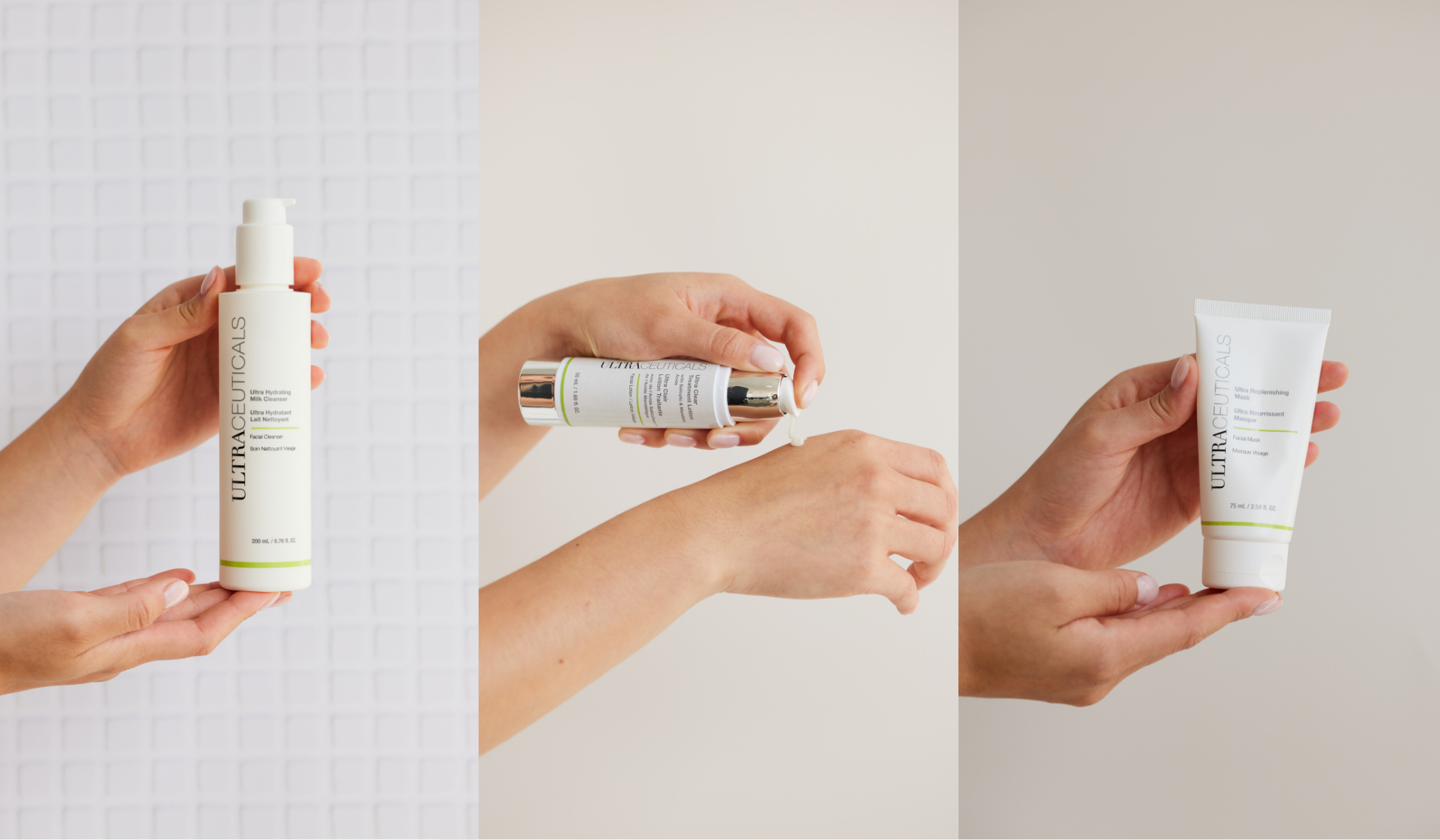
Ultraceuticals Ultra A Skin Perfecting Serum (and Serum Mild) A more straightforward retinol-based approach, with tolerance-building handled through concentration rather than delivery technology: Ultra A Mild for skin that's just starting out, and the standard Perfecting Serum once you're ready for more.
So, in short:
If you want my unbiased opinion: I'd go with an Environ Step-Up range, no matter what you've used before. My reasoning being they are the pioneers of Vitamin A in skincare - they know what they're doing - and even though you start at a lower concentration than some retinol serums you can build up to a higher concentration than any single retinol serum on the market can give you. E.g, AVST 5 and C-Quence 4 & 4 Plus have more Vitamin A than any retinol serum can legally give you under the new regulations.
You can browse our full range of Vitamin A products Here
The one thing to remember
Vitamin A is not an overnight ingredient, and it was never designed to be. Real, visible change builds over months of consistent use — not days. That's not a flaw in the product; it's the nature of asking skin to genuinely rebuild itself rather than temporarily disguise a concern.
If there's one thing worth taking from all of this, it's that consistency beats intensity every time. The right vitamin A for you is the one gentle enough to stay in your routine long enough to actually work.
Read more
Most people don't have a skincare problem. They have a routine problem. If you've tried good products — vitamin C, retinol, expensive serums — and your skin still isn't where you want it to be, it'...
You know the walk from the car to the front door. Four minutes, sideways rain, wind coming off nowhere in particular. You get inside, the heating's been on since six, and within about ninety second...