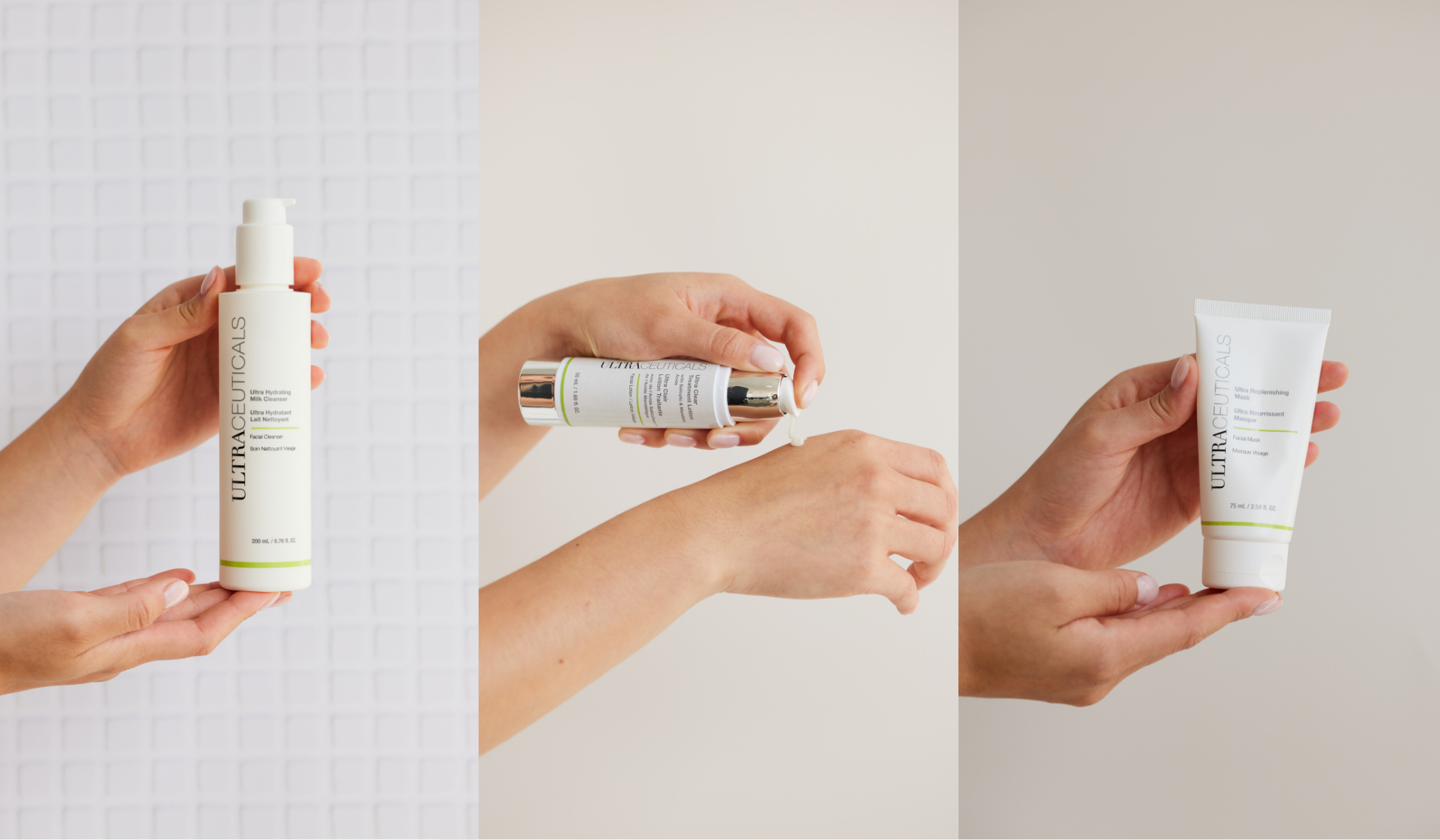
How To Build A Skincare Routine That Works (and why the answer probably isn't more products)
Most people don't have a skincare problem. They have a routine problem.
If you've got a shelf full of half-used serums and your skin still isn't where you want it to be, the abundance of products might be your exact problem. A simple, consistent routine matched to your actual skin concerns is what moves the needle. Here's how to build one.
Why Your Skincare Probably Isn't Working
Before we get into what to use, it's worth understanding why so many people plateau — because the answer is rarely the products themselves.
Inconsistency is the biggest culprit. The ingredients that genuinely change skin — vitamin C, retinol, SPF — work through cumulative, repeated exposure over weeks and months. Research consistently shows that meaningful visible results from active ingredients require a minimum of 8–12 weeks of daily use. Switching products every few weeks means you're never completing a single improvement cycle.
Too many products create more noise than signal. When you're switching between multiple products every few days/weeks, you can't tell what's working and what isn't. And if your skin reacts, isolating the cause becomes impossible. Multiple actives used together also increase the risk of barrier disruption — irritation that can actually set your skin back rather than move it forward.
Expecting results too soon. Human skin renews itself roughly every 28 days (a process that slows to 45–60 days as we age). Clinical studies measuring the effects of topical vitamin C on hyperpigmentation typically run for 12 weeks for good reason — that's the minimum timeframe to see the compound effect of consistent use. If you're evaluating a product at week three, you're not giving it a fair chance.
Using good ingredients — but the wrong ones for your skin. This is the one nobody talks about, and it's probably the most validating thing to hear: you can be buying genuinely high-quality, well-formulated products and still see no results, because they're not matched to your actual concern. A vitamin C serum is excellent for pigmentation — but if your primary concern is a compromised skin barrier, it may do little beyond adding another active your skin has to cope with. Niacinamide is broadly beneficial, but it won't address deep-set pigmentation the way a targeted brightening treatment will. Retinol is one of the most evidence-backed ingredients in skincare, but used on reactive or sensitised skin without the right support around it, it will make things worse before they get better — and most people stop before they ever see the benefit. Your cleanser migth be high quality, but it could be setting the rest of your routine up for failure. The products aren't failing due lack of effectiveness. The match between product and skin concern is. This is exactly why a skin assessment matters more than a shopping list.
What a Good Skincare Routine Really Needs
An effective skincare routine doesn't need to be complicated. It needs four things, done consistently, in the right order.
Step 1: Cleanse
Your cleanser removes accumulated skin cells, SPF, pollution, and sebum from the day (or night), and prepares your skin to absorb what comes next. A well-formulated cleanser should leave your skin feeling clean but comfortable — not tight, not stripped, and not "squeaky." If your cleanser causes stinging or leaves your skin feeling dry and taut, it's likely disrupting your skin barrier by stripping the natural lipid film your skin needs to function. Be careful that you are not using a cleanser for oily skin when you have normal skin and creating dry skin for yourself. You will have to compensate elsewhere and spend unnecessary money
For most people with normal skin in summer, a gentle gel or low-foam cleanser performs well. Fragrance-heavy cleansers are worth avoiding if your skin is sensitive or reactive.
Browse cleansers for your skin type here
Step 2: Treat
This is where your actives go — the ingredients doing the meaningful work. What you use here depends entirely on your skin concern:
- Brightening or uneven pigmentation: Vitamin C in the morning is your most clinically supported option. It works by inhibiting tyrosinase, an enzyme essential to melanin production, while also providing antioxidant protection against UV-induced oxidative stress. Multiple controlled studies show statistically significant improvements in pigmentation after 12 weeks of consistent use. Some of our favs are Alumier EverActive C&E™ + Peptide, Ultraceuticals Ultra C+ Rejuvenating C Chebula Serum and Genosys Multi Vita Radiance Serum. Check out the product descriptions to see which sounds best for you.
-
Ageing concerns: Retinol (a vitamin A derivative) applied at night is the most extensively researched over-the-counter anti-ageing ingredient. A peer-reviewed study published in the Journal of Cosmetic Dermatology (Kong et al., 2016) found significant wrinkle reduction after 12 weeks of topical retinol use, with evidence of ongoing collagen improvement up to 24 months of continued use. Some great options include
- for beginner retinol users: Ultraceuticals Ultra A Skin Perfecting Serum Mild, AlumierMD IntelliRET™ 0.3+, AlumierMD Retinol Resurfacing Serum 0.25,
- for intermediate retinol users: Environ Focus Care Youth+ Tri-Retinoid Complex Retinol Serum, AlumierMD Retinol Resurfacing Serum 0.5
- for experienced retinol users: Ultraceuticals Ultra A Skin Perfecting Serum, Environ Focus Care Youth+ Tri-Retinoid Complex Retinol Serum Forte
- or the world renowned Environ Vitamin A Step-Up System. Ranging from AVST 1 to AVST 5 for beginners and advanced retinol users. Check it out here
- Reactive or compromised skin: If your skin is currently inflamed or sensitised, you may not need an active treatment yet. Focusing on barrier repair first — before introducing actives — will deliver better long-term results. Some of the best barrier repairing ingredients include niacinamide, ceramides and panthenol (vitamin B5)
One active, used consistently, will outperform five actives used sporadically every time.
Step 3: Moisturise
Moisturiser normally isn't optional, even for oily skin — and this is one of the most persistent myths in skincare worth addressing directly.
Oily skin is characterised by excess sebum production. But sebum is oil, not water — it doesn't provide hydration. Your skin's water content and its oil content are separate systems. When the skin is dehydrated (lacking water), it can actually compensate by producing more sebum, worsening oiliness. A well-formulated, lightweight moisturiser — particularly one containing humectants like hyaluronic acid or glycerin — supports your skin's water barrier without adding oil.
A moisturiser also locks in the active ingredients from the step before and keeps the skin's barrier in the stable condition it needs to do its job.
Step 4: SPF (morning routine only)
SPF is the non-negotiable step, and the one most often skipped in Ireland for entirely understandable — but scientifically inaccurate — reasons.
UV radiation isn't dependent on sunshine or heat. Both UVA and UVB rays penetrate cloud cover. According to the World Health Organisation, even light or thin cloud cover offers very little UV protection, and in some conditions, scattered clouds can actually increase UV levels at the surface through a scattering effect (a phenomenon documented in peer-reviewed research published in Reviews of Geophysics, Calbó et al., 2005).
UVA rays in particular are responsible for the kind of skin damage that doesn't show up immediately — cumulative collagen degradation, uneven pigmentation, and accelerated skin ageing. They're present year-round, at lower intensities in winter but never absent.
If you're using a brightening serum, a vitamin C, or any active treatment for pigmentation — and skipping SPF — you are genuinely undermining your own results. UV exposure is the primary trigger for melanin overproduction. Without daily SPF, you're trying to empty a bath with the tap still running.
The Right Order Matters More Than You Think
Skincare absorption follows a simple physical principle: apply in order from thinnest to thickest consistency. Lighter, water-based products penetrate the skin most effectively when applied first. Heavier, oil-based products applied first form a partial barrier that reduces the absorption of anything applied on top.
Morning routine order:
- Cleanser
- Toner (if using an active toner — more on this below)
- Vitamin C or water-based treatment serum
- Moisturiser
- SPF — always the final step
Evening routine order:
- Cleanser
- Treatment serum (retinol or other actives)
- Hydrating serum if needed (hyaluronic acid, peptides)
- Moisturiser — a slightly richer formula than daytime
The most common ordering mistake is applying SPF before moisturiser. SPF works as a physical or chemical filter on the outermost layer of the skin. Applying a moisturiser on top of it can dilute its protective film and reduce its effectiveness. SPF goes last.
Do You Actually Need a Toner?
The short answer: it depends entirely on what the toner is doing.
The original function of toners — removing residue left by old soap-based cleansers that disrupted skin pH — is largely redundant with modern gentle cleansers. Alcohol-based toners that create a "squeaky clean" sensation are generally removing more than they should, and can weaken the skin barrier over time.
However, a toner that functions as an active is a different product entirely. Something like the AlumierMD Bright & Clear Solution — which contains lactic acid and salicylic acid — functions as a gentle, low-concentration chemical exfoliant in toner format. It earns its place in a routine because it's performing a specific, evidenced task: accelerating surface cell turnover, improving clarity, and supporting even skin tone. If your toner is doing something specific and measurable, it belongs. If it's just an extra cleansing step, it probably doesn't.
A Realistic Results Timeline
Honest timelines matter, because unrealistic expectations are one of the main reasons people abandon routines that were beginning to work.
Weeks 1–2: Your skin adjusts to a consistent routine. Some people notice a subtle glow from vitamin C's antioxidant activity relatively quickly. Others notice nothing yet — which is also normal.
Weeks 4–8: This is typically when hydration and barrier improvements become visible. Some brightening from vitamin C may begin to show. A study using 10% topical vitamin C showed improvements in dullness and early pigmentation visible at the 4-week mark, with more significant changes emerging at weeks 8–12.
Weeks 8–12: The primary assessment window for most active ingredients. Clinical studies on vitamin C consistently use 12-week endpoints for hyperpigmentation measurement. This is when meaningful changes to uneven skin tone, texture, and dullness become clearly visible for most people.
6 months+: The compounding phase. A study of tretinoin (the prescription-strength relative of retinol) on 89 participants found significant improvement in mottled hyperpigmentation and skin firmness at 6 months. OTC retinol takes longer to show comparable effects, but the direction of evidence supports continued improvement with sustained use.
The biology here isn't a technicality — it's the actual mechanism. Skin changes happen at a cellular level, and cells don't respond to urgency. A routine used consistently for 12 weeks will always outperform a more impressive-sounding routine abandoned at week four.
What Summer Changes (And What It Doesn't)
Summer doesn't require a completely different routine — but it does require some adjustments.
Heat increases transepidermal water loss (the rate at which your skin passively loses moisture to the environment), which means your skin may need more frequent hydration but generally benefits from lighter textures. Rich creams that work in winter can feel heavy and occlusive in summer heat, trapping sweat against the skin.
What summer actually changes:
- Switch to a lighter moisturiser texture in the morning — gel-cream or lotion rather than a dense cream
- Vitamin C becomes even more important in summer, not less. UV exposure generates free radicals that damage skin cells; vitamin C acts as an antioxidant that helps neutralise these before they cause lasting pigmentation and collagen damage. It works alongside your SPF, not instead of it
- SPF reapplication matters if you're outdoors for extended periods — a morning application provides meaningful protection for a few hours, but breaks down with sweat, sebum, and physical contact
What summer doesn't change:
- The need for a good cleanser at the end of the day (sweat and SPF both need to come off)
- The order of application
- The importance of consistency
Where to Start If You're Not Sure
The most common reason people end up with a shelf full of products and no visible results is that they built their routine around what was trending, not around what their skin actually needs.
Your skin type, your specific concerns, your sensitivities, and how your skin behaves across different seasons all determine which four products will work best for you. The right, matched four products will outperform eight products chosen from a trending list — every time.
If you're not sure where to begin, our free skin assessment is the most direct path to a routine built around your skin specifically. It takes about two minutes and removes the guesswork from the process. One of our skin experts will personally call you with what we'd recommend for your skin based on your answers given.
Take the free skin assessment →
HM Skin is an Irish skincare brand stocking clinically formulated products from AlumierMD, Genosys, Ultraceuticals, Environ, Dermaviduals, and the Advanced Nutrition Programme. All content is educational and is grounded in published research. Individual results vary based on skin type, concern, product concentration, and consistency of use.
References
Kong R, et al. (2016). A comparative study of the effects of retinol and retinoic acid on histological, molecular, and clinical properties of human skin. Journal of Cosmetic Dermatology, 15(1). https://doi.org/10.1111/jocd.12193
Calbó J, et al. (2005). Empirical studies of cloud effects on UV radiation: A review. Reviews of Geophysics, 43(2). https://doi.org/10.1029/2004RG000155
World Health Organisation. Radiation: Ultraviolet (UV) radiation. https://www.who.int/news-room/questions-and-answers/item/radiation-ultraviolet-(uv)
Phyto-C Skin Care. Vitamin C serum for hyperpigmentation: multiple controlled studies show statistically significant improvements in melanin index scores after 12 weeks of daily application. https://www.phyto-c.com/blogs/news/vitamin-c-serum-for-hyperpigmentation